
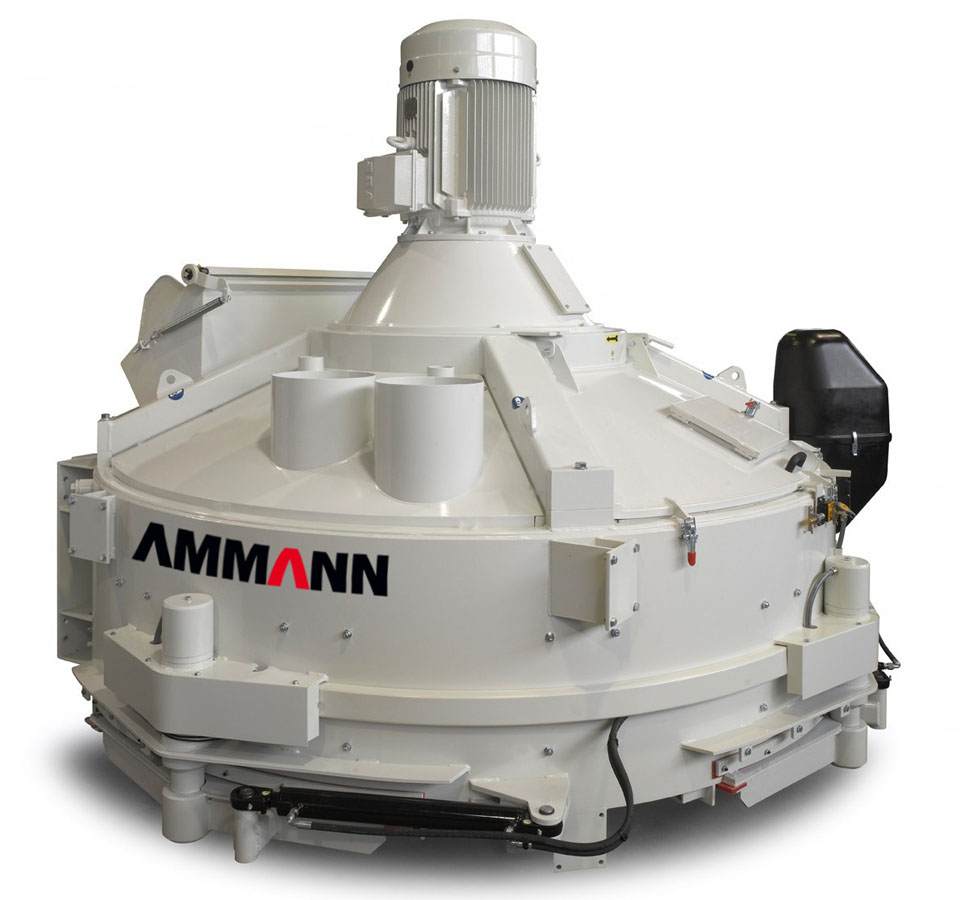
Mixer for an Elba batching plant – selecting the right mixer is one of the most critical decisions when designing a concrete batching plant. With Ammann Elba systems, you can choose between single-shaft and twin-shaft mixers—each offering unique advantages depending on your production needs.
Single vs Twin Shaft Mixers – What’s the Difference?
Single-Shaft Mixer:
- Suitable for lower production volumes,
- Ideal for dry or semi-dry concrete mixes,
- Simpler construction – easier maintenance and lower operating costs,
- Reduced energy consumption.
Twin-Shaft Mixer:
- High throughput – perfect for large-scale batching plants,
- Better suited for dense, high-strength concrete mixes,
- Faster mixing time and more homogeneous results,
- Higher upfront cost, but greater long-term efficiency.
How to Match a Mixer to an Elba Batching Plant
Elba batching plants are compatible with both mixer types. Choosing the right one depends on your specific project requirements:
- For precast production or smaller-scale operations, a single-shaft mixer is often sufficient.
- For high-volume concrete production or on-site batching for infrastructure projects, a twin-shaft mixer is a more efficient and durable option.
Key factors to consider include:
- Type of concrete to be produced,
- Target output (in m³/h),
- Project timeline,
- Availability of technical support and servicing.
When Is a Twin-Shaft Mixer the Better Choice?
Consider investing in a twin-shaft mixer if your project involves:
- Large-scale production,
- Continuous operation,
- Specialized concrete mixes (e.g. SCC, HPC).
In such cases, a twin-shaft mixer for an Elba batching plant delivers higher performance, consistency, and durability—despite the higher investment cost.
Conclusion – mixer for an Elba batching plant
Choosing the right mixer for an batching plant directly impacts your productivity, concrete quality, and return on investment. Align your mixer choice with your project’s scale, schedule, and material requirements to get the best results.