
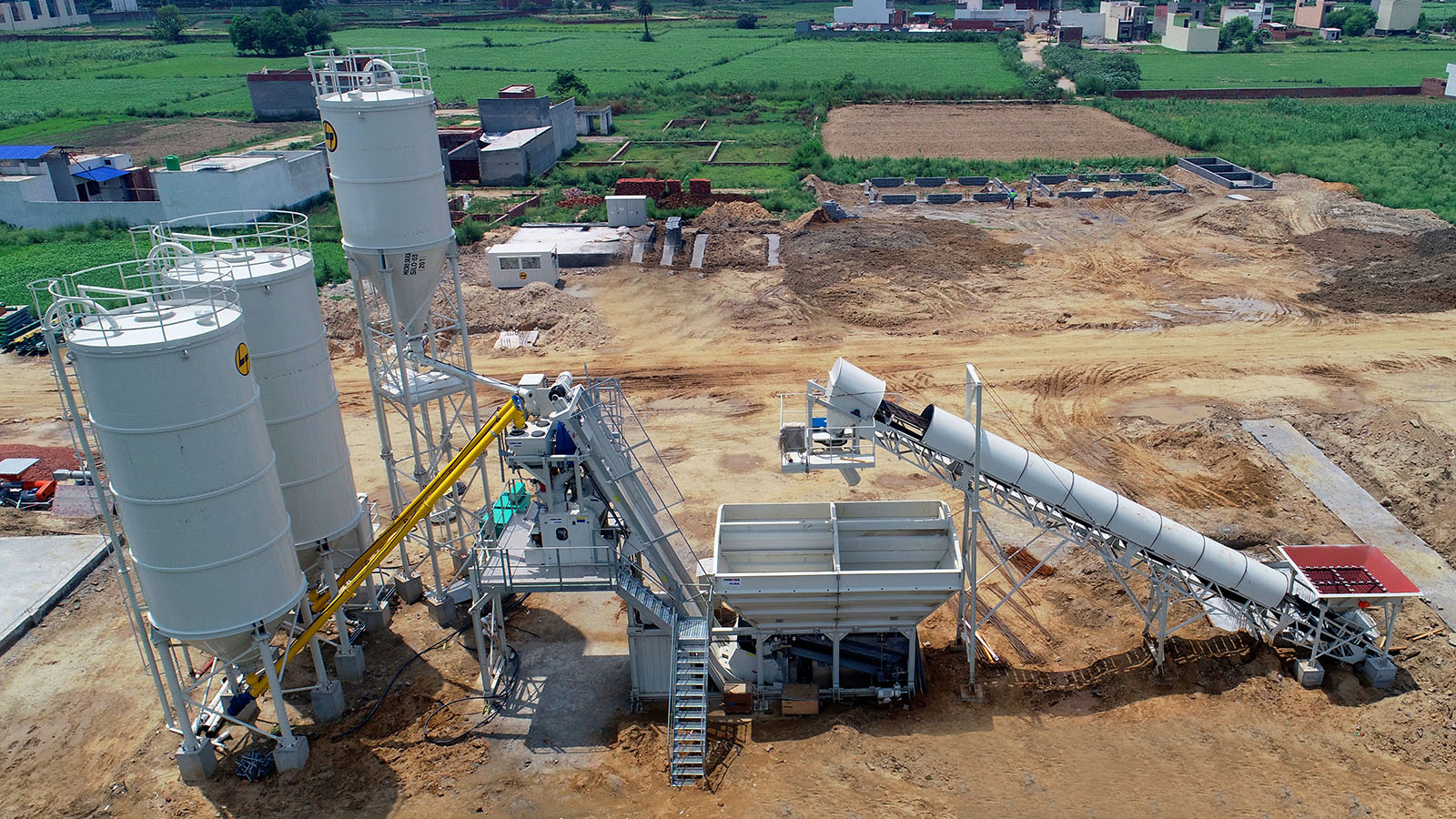
With rising labor costs and growing pressure to maximize productivity, concrete batching plant automation has become a key competitive advantage. Modern control systems not only speed up production but also improve concrete quality, enhance safety, and reduce the risk of human error. Find out how automation can transform your batching plant and deliver real savings.
1. What Does Automation Mean for a Batching Plant?
Automation involves the implementation of advanced control and monitoring systems that:
- manage the dosing of raw materials,
- control mixing time and temperature,
- enable remote operation and supervision,
- record production data in real time.
It’s more than just replacing manual panels with a computer—it’s an intelligent system that analyzes and optimizes the entire process.
2. Increased Production Efficiency and Repeatability
Automation enables:
- shorter production cycles,
- elimination of operator errors and related downtime,
- complete control over concrete mix parameters.
This means more concrete produced in less time—with consistent, high quality.
3. Precision = Reduced Material Waste
Modern dosing systems allow for extremely accurate measurement of ingredients:
- less excessive use of cement and aggregates,
- reduced water-to-cement ratio variability,
- optimized mix proportions.
These improvements directly affect costs and the quality of the final product.
4. Improved Reporting and Quality Control
Automated systems offer:
- detailed batch reporting,
- data archiving for traceability,
- quick detection and correction of deviations.
This makes it easier to meet quality standards and client expectations.
5. Safety and Operator Ergonomics
Automation reduces the need for manual control, which:
- lowers the risk of workplace accidents,
- reduces operator fatigue,
- simplifies training for new staff.
A safer, more predictable process also means fewer costly mistakes.
6. Is It Worth the Investment?
The cost of implementing automation depends on:
- your plant’s current technological level,
- production volume,
- the scope of the system’s features.
Return on investment typically occurs within 1–3 years, thanks to material savings and increased efficiency.
Conclusion – concrete batching plant automation
Concrete batching plant automation is an investment in stability, quality, and competitiveness. It accelerates production, reduces errors, cuts costs, and improves operator working conditions. Want to modernize your batching plant? Contact the experts at Ekami—we’ll help you find the solution that fits your needs.